Today is World Lizard Day, and we are recognising the majestic Heath Goanna (Varanus rosenbergi), also known as Rosenberg's Goanna, which was observed by the Reserve Management team for the first time on one of our regional nature reserves a few months ago. This remarkable sighting highlights the positive impact of thousands of hours of hard work by Nature Foundation staff, volunteers and contractors to conserve, restore and protect our precious nature reserves.
One of Australia’s larger reptile species, growing to over 1.5m long, the Heath Goanna is listed as Vulnerable both nationally and in South Australia and Critically Endangered in Victoria, due to habitat loss, land clearance, road strikes and predation, particularly on eggs and young lizards. In fact, it is estimated that there are possibly fewer than 100 individuals left in each of the mainland SA natural resources regions in which they occur.
Individual Heath Goannas have a very large foraging range, requiring at least 80-hectares of intact remnant native vegetation with specific characteristics.
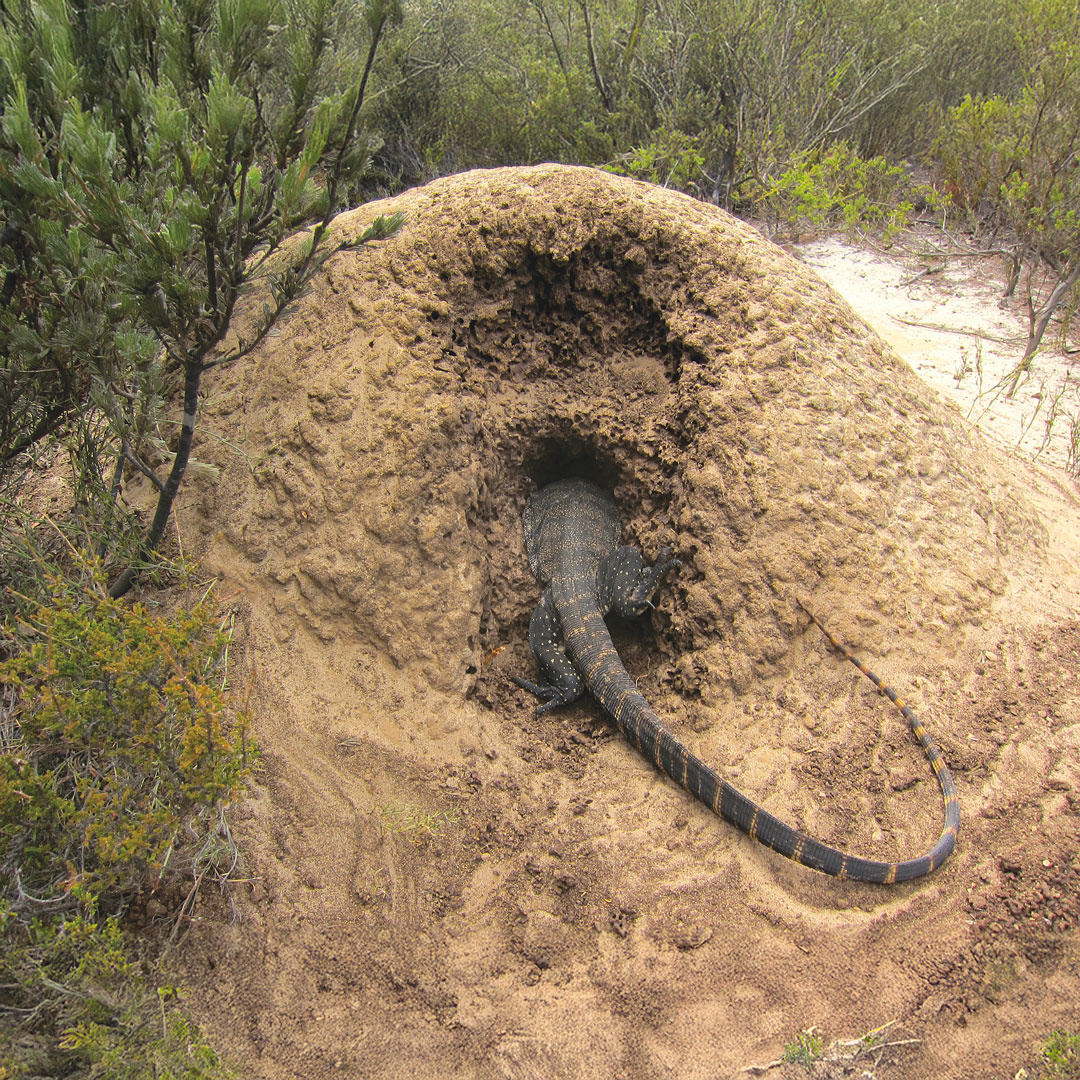 Healthy, active termite mounds are essential for their breeding, providing stable temperature and humidity conditions for egg incubation. Females invest an extraordinary effort in nesting, spending up to 2 days excavating a chamber. They then guard the nest for weeks while the termites repair the mound’s protective layer. Incubation then takes a further 8 months!
Due to their specialised nesting technique, the species is highly vulnerable to introduced predators such as feral cats and foxes, which limit growth to adult populations. Sadly, less than one in 12 young tend to survive their first year, with individuals taking up to 9 years to reach breeding age. We would prefer to see many more of them experiencing their full 20-30 year lifespan.
Land protected in perpetuity with targeted, adaptive management efforts is critical to conserving native species, including this magnificent high-level predator that plays a key role in maintaining ecosystem balance.
Read more about Heath Goanna's on this fact sheet.
Photos:
- Top: Heath Goanna (Varanus rosenbergi) via Animalia
- Inset: Heath Goanna digging into termite mound to lay eggs