High quality science underpins our efforts to manage our unique biodiversity for future generations sustainably, and an essential aspect of this is offering research grants for university students and early career researchers, supported by our generous donors.
Since 2000, Nature Foundation has awarded $2,045,786 in research grants to post-graduate students, academics, and the community to kickstart careers in research, supporting 471 researchers.
Five student research grants were awarded in the 2026 round, along with the Mike Bull Award for Early Career Nature Scientists.
We are delighted to share this year’s research grant recipients and their projects with you.
Grant Start Grants – Honours
These grants provide up to $2000 for one year to assist an Honours student undertaking research.
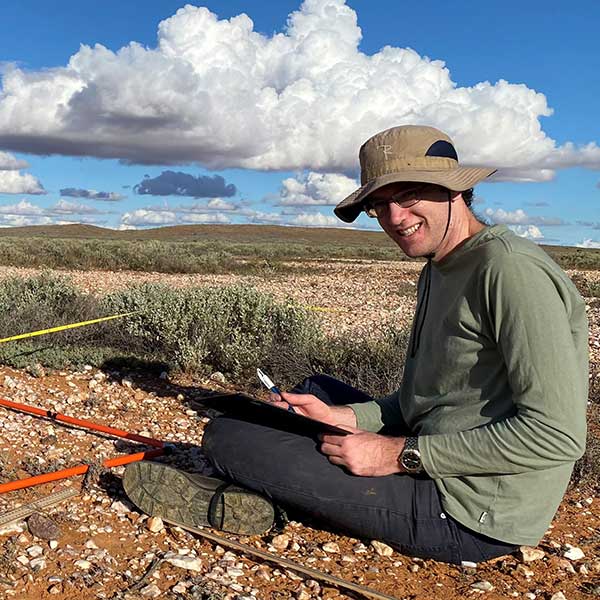 Jack O’Leary
Bachelor of Science (Honours)
Monash University
Banded vegetation patterns in arid South Australia
Jack's project aims to identify whether a successional structure is present in banded vegetation under different landscape conditions. Banded vegetation is a phenomenon in arid landscapes in which vegetation and bare earth alternate in stripes. It occurs in near-flat regions where rainfall is insufficient for plants to reach full cover. In this manner, arid species can persist much further into the arid zone than otherwise.
There is a lack of fine-scale field data quantifying community structure and succession of banded systems, and Australian studies thus far have focused on NSW, WA and the NT. This project aims to characterise the community structure of banded vegetation in a South Australian case study and to improve understanding of arid systems to facilitate the management, conservation, and restoration of these landscapes.
Nature Foundation Scientific Expedition Foundation RL & GK Willing Grant
This grant provides up to $2000 for one year to support an Honours student.
-
Proposed research must advance the understanding of trends in the abundance and distribution of native populations of South Australian fauna and flora, or
-
Advance understanding of the way soil, water, geology, or climate factors affect the abundance and distribution of native populations of South Australian fauna and flora.
This is a partnership between Nature Foundation and Scientific Expedition Foundation.
 Peyton Hampel
Bachelor of Science in Ecology and Environmental Science (Honours)
Adelaide University
Functional Response of Dryland Vegetation to Herbivore Exclusion
Arid ecosystems host unique and biodiverse flora and fauna adapted to harsh conditions. As well as livestock, rabbits, goats, and kangaroos add to arid-zone grazing pressure. This can lead to high levels of grazing that were not historically possible in these ecosystems, which alters their natural functioning. While overgrazing is widely recognised as detrimental to arid environments, research is unclear about which grazing intensity best supports ecosystem function, and about how to disentangle the effects of livestock, feral, and native herbivores.
Peyton's project will measure plant defence "traits" to understand the myriad ways plants in the arid zone defend themselves against herbivores and their impact not just on individual species but on the functional diversity of the ecosystem. This taxonomically agnostic approach means these findings will be relevant across arid zones across Australia and the world.
Grand Starts Grants – PhD/Masters
These grants provide up to $3000 per annum for a maximum of three years to assist a PhD/Masters student undertaking research.
 Jake Thornhill
PhD Candidate
Adelaide University
Characterising subterranean biodiversity and assessing groundwater ecosystem response to anthropogenic pressures with environmental DNA
The groundwaters of South Australia's Limestone Coast are critical to sustaining surface freshwater ecosystems. Frequently overlooked in conservation management but wholly dependent on groundwater, subterranean ecosystems host exceptional biodiversity of animals and microbes. Preliminary Limestone Coast surveys for stygofauna (subterranean groundwater animals) conducted in 2016 revealed a diversity of species that rivals that of Australia's subterranean biodiversity hotspots, such as the Pilbara. Continued groundwater use by the region's two main economic drivers (forestry and agriculture) has lowered the water table over the last 50 years, placing these keystone ecosystems at risk.
Improved understanding of anthropogenic impacts on groundwater ecosystems is critical to well-informed conservation management and restoration decision-making for high-value freshwater assets, ensuring the long-term sustainability of groundwater resources for economy and environment alike. The potential research outcomes from Jake's project are transferable and applicable in informing management of groundwater-dependent wetlands, including Nature Foundation's Watchalunga and Murbpook Nature Reserves.
Lynette Aplin 'Knowledge in Science' Research Grant
This grant provides $5000 to a PhD/Masters student to support their next year’s research.
Proposed research must take place on one of Nature Foundation’s 10 nature reserves.
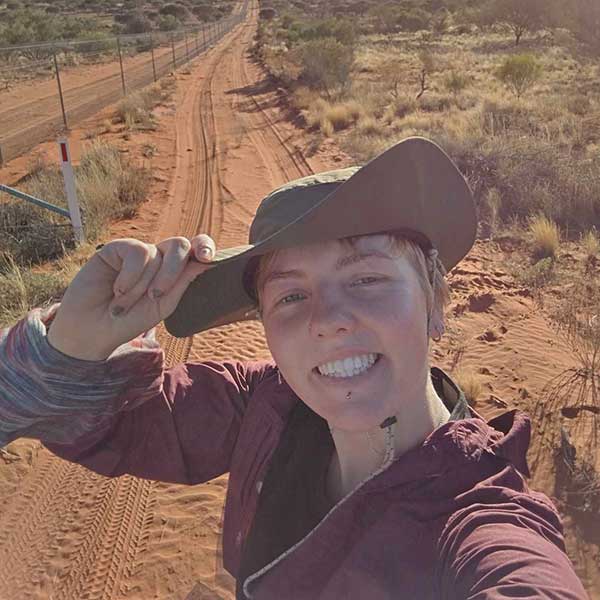 Charlotte Hogan
PhD Candidate
University of NSW
Understanding the role of soil microbes in maintaining arid-zone brown food webs and biodiversity
The brown food web describes the gradual transfer of energy from senescing vegetation to detritivores, such as soil microbes and invertebrates, and ultimately to vertebrate consumers. Increasing evidence suggests that brown food webs are crucial in deserts, providing an energy source that allows biodiversity to persist during periods of limited moisture and primary productivity, which dominate these ecosystems.
Grazing pressure from feral and overabundant native herbivores reduces green vegetation biomass across Australian drylands, presumably limiting organic matter inputs to the brown food web. However, a limited understanding of the mechanisms regulating brown energy channels hinders our ability to predict the impacts of grazing on arid ecosystems. In particular, the role of soil microbes in influencing decomposition is unclear. Additionally, although mounting evidence suggests that soil microbes can use alternative energy sources to survive in nutrient-sparse deserts, how this contributes to the brown food web remains unknown.
Charlotte's project—including field research at Witchelina Nature Reserve—aims to investigate the role of soil microbes in the brown food web, and how grazing pressure affects carbon cycling via this pathway.
Roy and Marjory Edwards Scholarship
This scholarship provides up to $12,000 per annum for up to three years to support a student at an Australian university. This scholarship was initiated in 2002 by a generous donation from Mrs Marjory Edwards to establish a perpetual scholarship in conservation biology.
Proposed research must address at least one of the following priority areas:
-
It must aim to make a significant contribution to the conservation of South Australia’s biodiversity, or
-
It must contribute to the resolution of an environmental problem or the conservation of South Australia’s wildlife
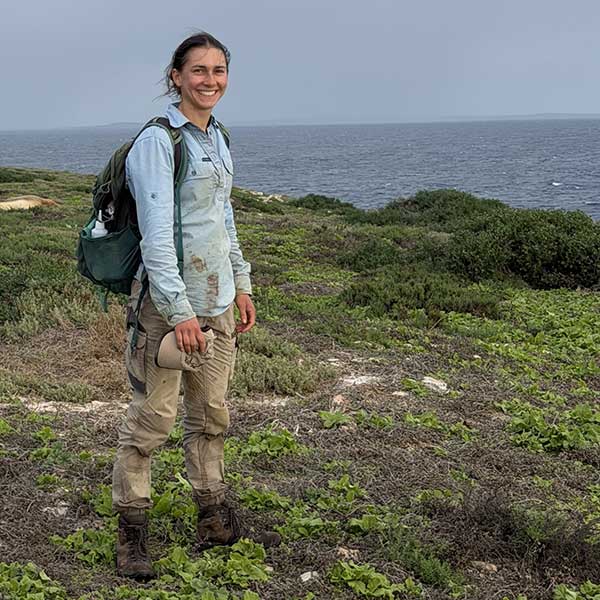 Caitlin La Rose
PhD Candidate
The University of Sydney
Investigating the Impacts of PFAS on the Health of Australian Pinniped Pups in South Australia
Australia's marine ecosystems are increasingly affected by anthropogenic threats, including climate change, habitat degradation, fisheries interactions, and pollution. These human-induced stressors disrupt ecosystem function, amplifying the impacts of natural threats on marine species. Pollution is one of the most widespread and persistent threats to marine biodiversity. Of particular concern are per- and polyfluoroalkyl substances (PFAS), a group of contaminants described as "forever chemicals" for their persistence in the environment and global distribution. These toxicants have been detected in the blood and tissues of both live and dead Australian Sea Lions (Neophoca cinerea).
Exposure to elevated PFAS concentrations has been associated with altered immune function, hormone disruption, and increased disease susceptibility in marine mammals and may amplify the effects of other anthropogenic and natural stressors acting on wildlife populations. While PFAS are being phased out in some regions, their environmental persistence and ongoing sources continue to expose marine species.
Caitlin's project will use the Endangered Australian Sea Lion as a sentinel species for ecosystem health. It will explore the relationships among health parameters, maternal factors, and PFAS concentrations. The results of this project will provide critical insight beyond just a single species, with implications for other vulnerable taxa occupying similar food webs and environments.
Caitlin has been awarded a three year scholarship.
Mike Bull Award for Early Career Nature Scientists
The Mike Bull Award was created to support the career of an emerging nature scientist and continue Professor Mike Bull’s legacy of research in animal behaviour, ecology and conservation research.
The award includes a medal for academic excellence along with a $5000 grant to support the career of the recipient.
.jpg "2026-Mike-Bull-Award-Dr-Pablo-Recio-Santiago-web-(1).jpg") Dr Pablo Recio Santiago
Dr Pablo Recio Santiago
Understanding the endrocrine mechanisms driving pair bonding in animals, specifically the sleepy lizard
2026 Mike Bull Award recipient, Dr Pablo Recio Santiago has a PhD in Biology from the Australian National University (ANU) and is a Research Associate at the Lab of Evolutionary Genetics, Conservation and Sociality, at Flinders University.
Pablo's research focuses on understanding the endocrine mechanisms that drive pair bonding in animals. His current project aims to understand the roles of mesotocin and dopamine in shaping social preferences in Sleepy Lizards (Tiliqua rugosa) and continues Mike Bull's legacy by extending our understanding of the remarkable long-term bonds he discovered in this species.
This project will also contribute to the field of behavioural ecology by linking hormonal systems to partner preference and social decision-making, an area with broad implications for understanding monogamy across vertebrates. By focusing on a lizard species with a well-documented natural history, the project makes a meaningful contribution to herpetology, particularly regarding the physiological and behavioural underpinnings of a mating system that remains rare and poorly understood in reptiles.
We wish all our 2026 grant recipients well with their research and look forward to bringing you more updates.
You can support the future of these research grants by donating to the Grand Start Grants Appeal, or Professor Mike Bull Research Fund.