The Reserve Management team and Nature Foundation volunteers recently held the inaugural working bee at Mongolurring Nature Reserve in September 2025. Located east of Mount Bryan in South Australia’s midnorth, this 1,200-hectare area of mallee woodland was generously donated to Nature Foundation by a benefactor in June 2024.
Volunteers Sonia and Tim Croft undertook an initial vegetation assessment in October 2024, which, in addition to assessing vegetation types and habitats across the western side of the reserve, identified evidence of invasive weeds, including African Boxthorn (Lycium ferocissum) and a localised patch of Horehound (Marrubium vulgare). Further assessment found African Boxthorn widespread across the nature reserve, with mature, dense patches dominating some areas. The species is listed as a Weed of National Significance (WoNS) and is a declared weed under South Australian legislation due to its severe environmental impacts. It forms dense, spiny thickets that displace native vegetation, alter habitats, and reduce biodiversity. African Boxthorn is a prolific seeder that can choke watercourses, impede surface flows, and restrict wildlife movement. It also provides shelter for feral animals such as cats and foxes.
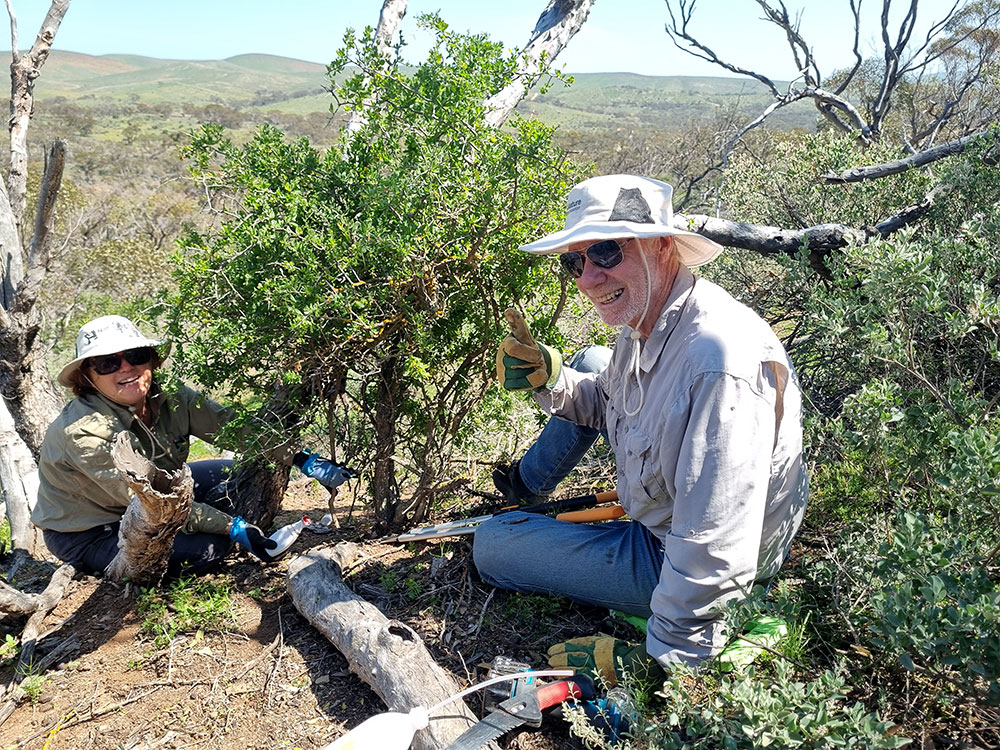 Equipped with a new suite of field tablets for weed mapping funded by the Friends of Parks and Nature Grants Program 2024, a team of six Nature Foundation Volunteers joined two Reserve Management team members for the four-day weed control working bee.
Despite the challenges posed by its long, sharp spines, the group successfully mapped and controlled 638 African Boxthorn plants across approximately five hectares. As this was the first major Boxthorn control effort on the property, most of the treated plants were large, mature specimens, and control methods included cut-and-swab and drill-and-fill techniques.
These results reflect the significant effort and resilience of all participants under demanding conditions. While much work remains to manage this species across the reserve, this initiative represents an excellent start.
 Activities like this not only achieve critical conservation outcomes but also provide valuable opportunities for the Reserve Management team to collaborate with our committed volunteers and closely inspect the property.
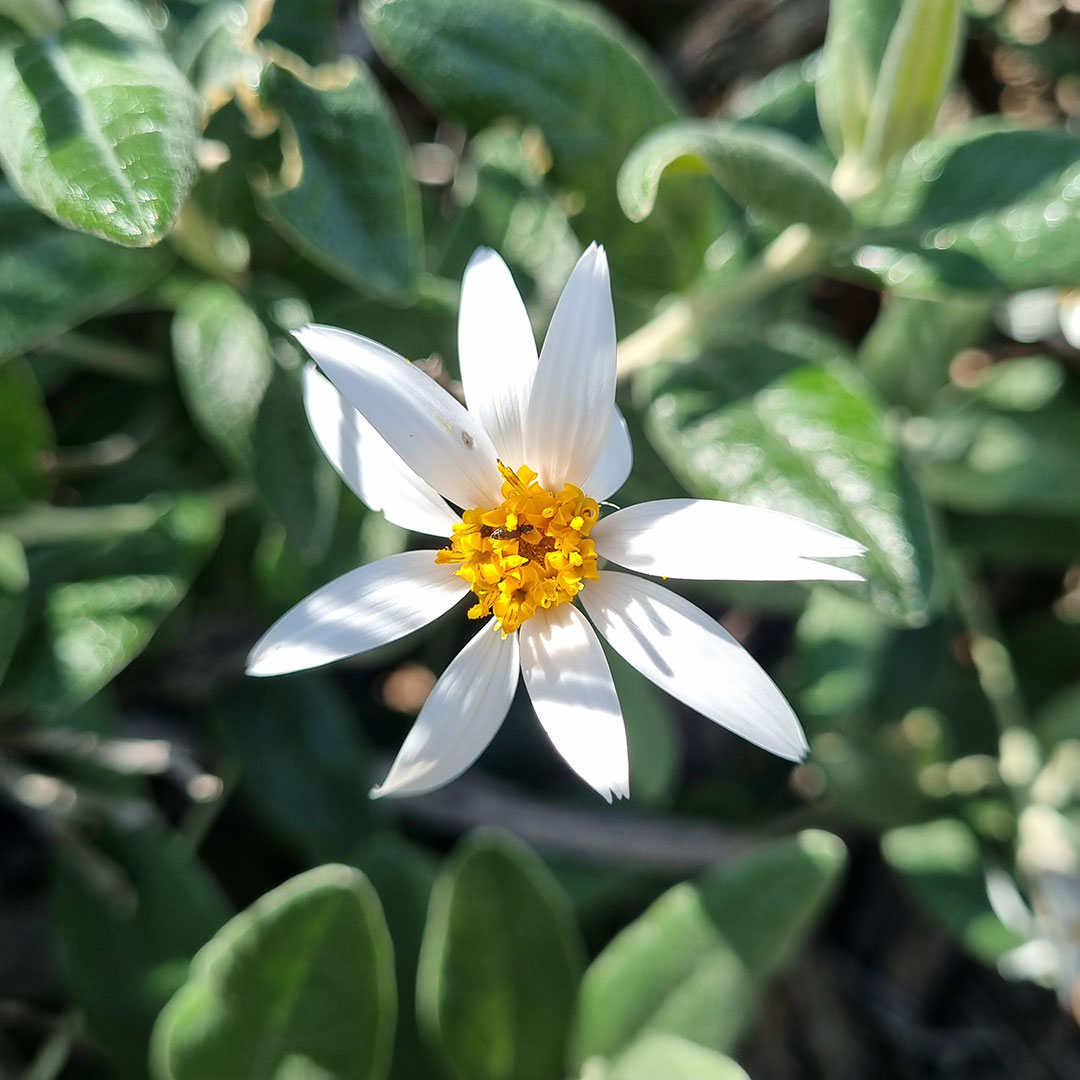
During the working bee, Nature Foundation staff observed a single Silver Daisy Bush (Olearia pannosa ssp. pannosa), a nationally Vulnerable species, uncommon in the midnorth region, with known populations small, scattered and isolated. The species is highly susceptible to displacement by weeds and to grazing by feral animals, such as goats, present on the Mongolurring Nature Reserve. The observed plant was intact, protected within mallee branches. Discoveries like this highlight the importance of ongoing management activities, including weed and feral animal control and boundary fence upgrades, which will support the recovery and spread of such threatened species.
Many thanks to the Reserve Management team and our volunteers for their efforts!
Learn more about and register your interest in our Volunteer Program here.
 This project is supported by the Friends of Parks and Nature Grants Program and is jointly funded by Nature Foundation and the Department for Environment and Water.
Photos: Top – Nature Foundation Volunteers David and Cate, Middle – Nature Foundation Volunteers Catherine and Ian, Bottom – Silver Daisy Bush (Olearia pannosa ssp. pannosa). All photos by Jem Shimmield.