The key action of the 2025-2030 Science Strategy, the Nature Foundation Biodiversity Monitoring Program (NFBMP), plays a vital role in our collective efforts to conserve biodiversity. It includes standardised survey sites and techniques for vegetation, birds, reptiles, and mammals across all reserves, monitored each autumn and spring, with targeted surveys to gather crucial data on key threatened species.
This consistent approach to monitoring ensures that we use resources effectively to maximise positive outcomes for biodiversity.
Throughout 2025, the Science and Knowledge team successfully established monitoring sites across all Nature Foundation reserves. With more than 120 sites and over 200 remote cameras, this progress demonstrates our commitment and capability to monitor diverse habitats effectively.
Each site has two remote cameras: one forward-facing and one downward-facing, mounted above a gridded board to assist in identifying small species. Sites also include a series of roof tiles for monitoring reptiles and invertebrates, as well as defined vegetation monitoring transects.
The Science and Knowledge team recently completed the autumn survey round, visiting all sites and conducting bird and vegetation surveys, inspecting the reptile tiles, and reviewing the remote camera images captured.
While the team are still analysing survey data, initial sightings from the remote camera images at Murbpook Nature Reserve highlight notable wildlife activity, including these interesting observations:
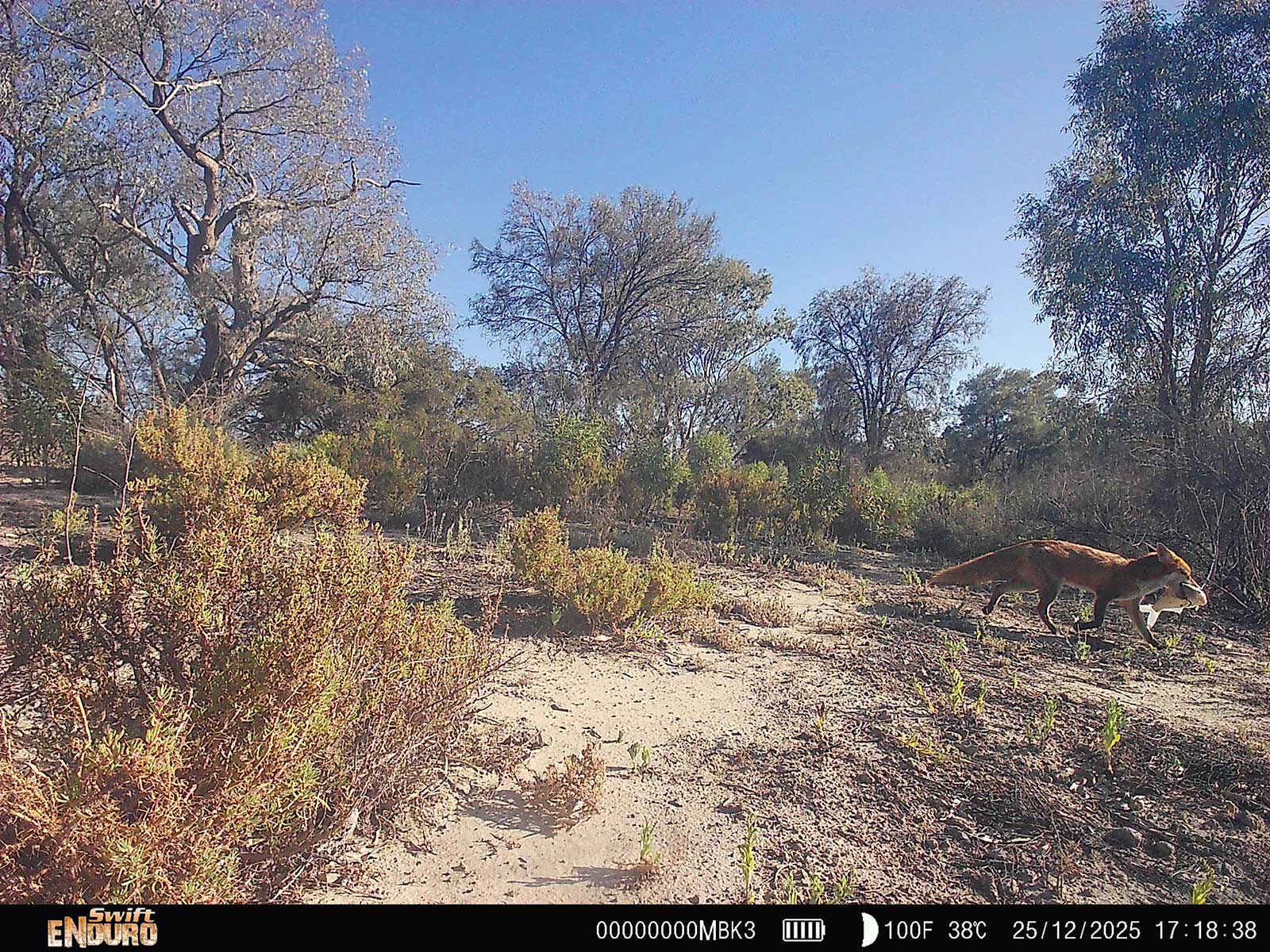
A remote camera captured this interesting and unusual sight of two feral species: a Red European Fox (Vulpes vulpes) carrying a large European Carp (Cyprinus carpio). While foxes are omnivores, they aren't generally known to eat fish. We are unsure how the fox caught such a large fish and will keep this in mind during ongoing data analysis and reserve activities, in case we uncover further insights into this behaviour.
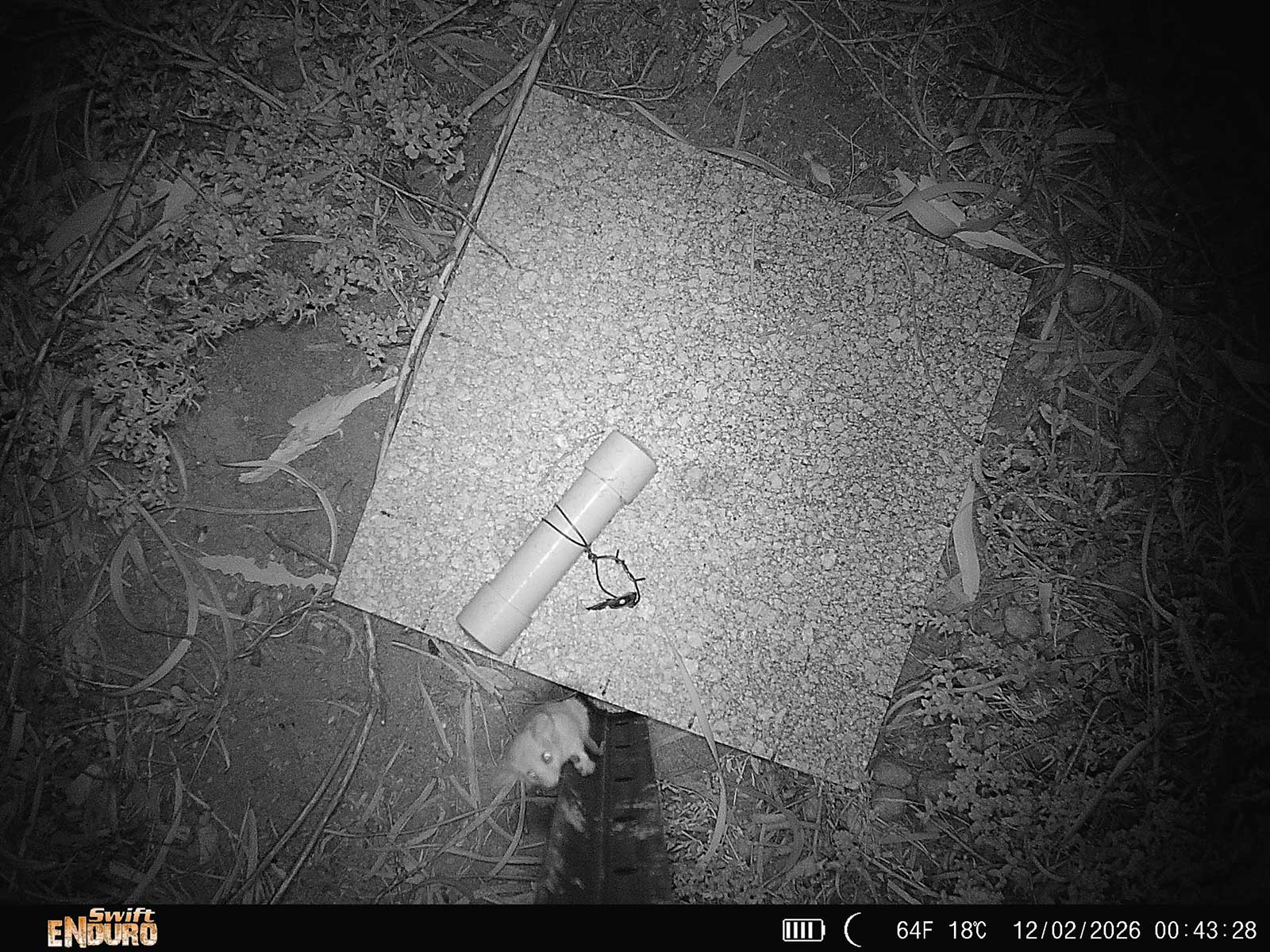
We were also delighted to spy this tiny Western Pygmy Possum (Cercartetus concinnus) on a remote camera image from Murbpook; the first known sighting of this species at the reserve!
While they don't have threatened status locally, sightings have been limited, with only 5 records within a ~30km radius in the Atlas of Living Australia. Western Pygmy Possums are listed as Endangered in NSW largely due to threats like vegetation clearing, overgrazing, fire regimes, and introduced predators such as foxes and feral cats, highlighting the importance of nature reserves and conservation actions.
Western Pygmy Possum's body length ranges from around 5-7.7cm with an 8cm tail. Despite their diminutive size, they are one of the largest pygmy possums in the world. The species prefer areas with bottlebrushes, banksia, and grevillea, and assist in pollinating these plants.
Like all pygmy possums, the Western Pygmy Possum enters mini hibernating periods called torpor. When temperatures dip below 12°C and food is scarce, they'll fall into a deep sleep for several days.
If this species has taken up residence at Murbpook Nature Reserve, it reflects the positive impact of our conservation activities, especially threat management actions to control weeds and feral predators, supporting ongoing habitat recovery.
This observation also highlights the importance of routine monitoring, without which we likely would not have been aware of the pygmy possum's presence.
We hope to see increasing encounters of Western Pygmy Possums and other small native mammals through our ongoing monitoring program and look forward to sharing further insights from the analysis in the coming months.