Nature Foundation’s Strategic Plan: Towards 2030 features objectives including:
- Actively reducing the impact of invasive species
- Having a specific work program targeted at each priority invasive species on each reserve
- Being a research partner and collaborator of choice, and a facilitator to expand the influence of our research
So, when an opportunity arises that covers all three, it gets our attention!
CSIRO’s focus on biocontrol
The CSIRO has been working on the biological control of weeds since the 1920s, with a focus on temperate and tropical weeds of natural, agricultural and rangeland ecosystems.
“Biological control is the practice of managing a weed by the deliberate use of one or more natural enemies (biocontrol agents) that suppress it. Following their introduction and establishment, populations of biocontrol agents build up to very high levels due to the abundance of the weed. Eventually their attack on the plant causes a decline in the weed biomass, reproduction and/or population density. Biocontrol agents of weeds, once established, are self-sustaining and don’t have to be reapplied. A series of cost-benefit analyses in 2006 revealed that for every dollar spent on biocontrol of weeds, agricultural industries and society benefited by A$23. This was due to increases in production, multi-billion dollar savings in control costs and benefits to human health.”
Source: https://research.csiro.au/weed-biocontrol/
Managing invasive species at Mongolurring Nature Reserve
Nature Foundation’s Mongolurring Nature Reserve is located on Ngadjuri country, east of Mount Bryan in South Australia’s mid-north. This 1,200-hectare area of mallee woodland was generously donated to Nature Foundation by a benefactor in 2024.
In October 2024, Nature Foundation Volunteers Sonia and Tim Croft undertook an initial vegetation assessment at Mongolurring, which, in addition to assessing vegetation types and habitats across the western side of the reserve, identified evidence of invasive weeds, including African Boxthorn (Lycium ferocissum). Further assessment found African Boxthorn widespread across the nature reserve, particularly in the southern half, with mature, dense patches dominating some areas.
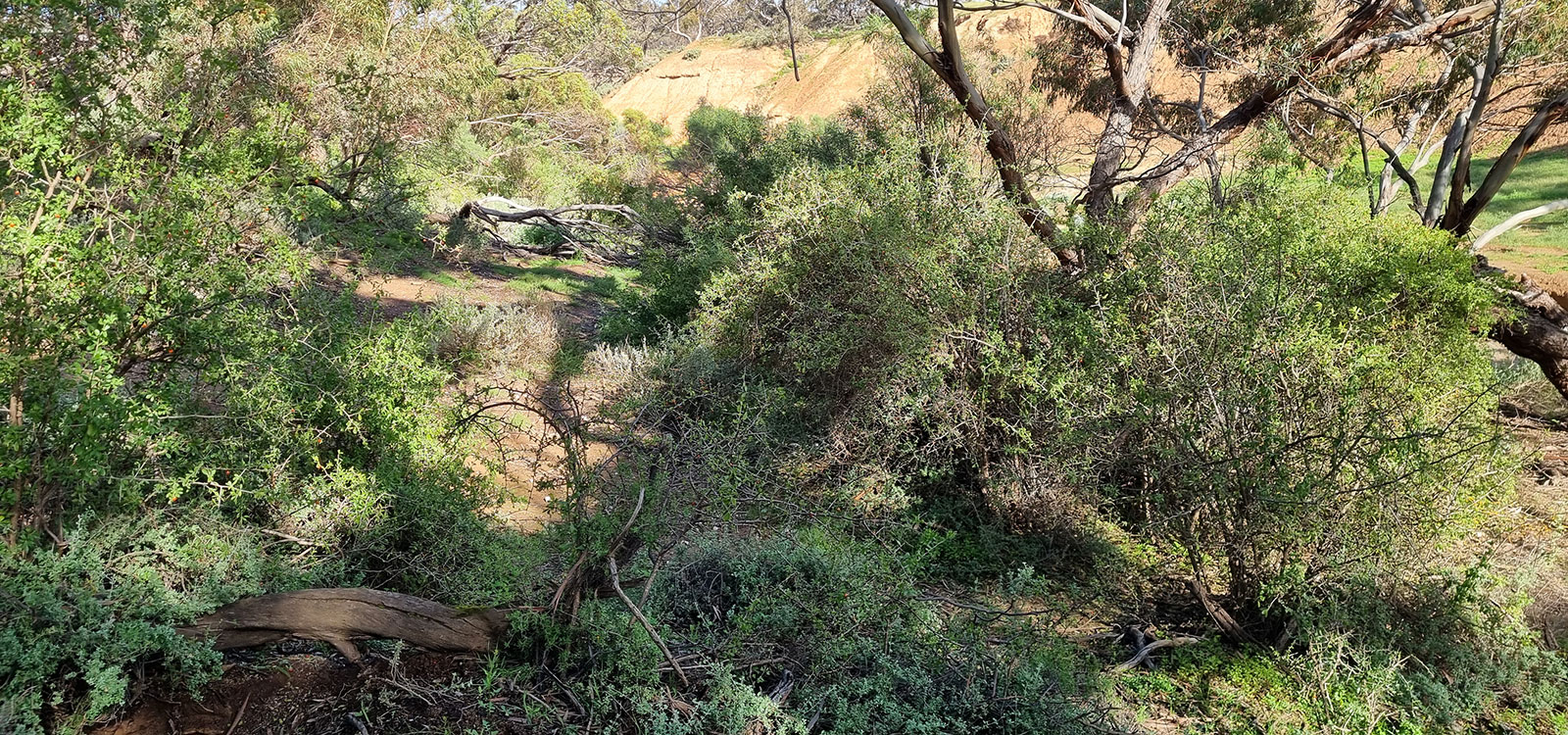
The invasive species, native to South Africa, is a widespread and significant environmental and agricultural weed in regional Australia, listed as a Weed of National Significance and is a declared weed under South Australian legislation due to its severe environmental impacts. African Boxthorn forms dense, spiny thickets that displace native vegetation, alter habitats, and reduce biodiversity. The weed is a prolific seeder that can choke watercourses, impede surface flows, and restrict wildlife movement. It also provides shelter for invasive feral species such as cats and foxes.
Initial reserve management actions at Mongolurring have focused on invasive species, including a four-day assignment with Nature Foundation volunteers in September 2025, that cleared 638 African Boxthorn plants across approximately five-hectares of the nature reserve. Minimal disturbance control techniques are used to avoid damaging the surrounding native vegetation, such as cut-and-swab and drill-and-fill methods. Cut and swab involves cutting the plants back to their base and swabbing the surface of the cut stem with a small amount of herbicide, and drill and fill involves drilling downward-angled holes into the base of the trunk and filling them with concentrated systemic herbicide to prevent regrowth.
While effective, these approaches are long-term labour-intensive conservation actions that require significant resources and effort from the Reserve Management team, with active support from Nature Foundation Volunteers.
Biocontrol research trial for African Boxthorn
CSIRO's biological control research has included identifying which of the many natural enemies that attack African Boxthorn in its native range in South Africa are the most appropriate biocontrol agents for this weed. Biological control offers promise as a safe, non-destructive, cost-effective, and sustainable method of control. The relative taxonomic isolation of African Boxthorn from native Australian flora, together with its negative impact profile, makes the species a suitable target for biological control.
The biocontrol agent provided by the CSIRO for this project is a rust fungus, Puccinia rapipes, that infects the leaves of African Boxthorn. The rust fungus was originally isolated from diseased boxthorn plants in South Africa and, through extensive host-specificity studies conducted by the CSIRO, was shown to be highly specific to African Boxthorn and not to damage native Australian vegetation. In 2021, the fungus was approved for release into the Australian environment as a biocontrol agent to assist with the control of African Boxthorn.
We are proud to partner with the CSIRO on this biocontrol trial of the rust fungus at Mongolurring Nature Reserve, with the initial release undertaken by the Reserve Management team in early July 2026. Five test sites were established across the southern and western parts of the reserve, with the fungus released onto eight African Boxthorn plants at each site. The plants at each site are in proximity to each other and additional untreated boxthorn plants, increasing its chances to spread. Traditional weed management actions will continue for the other areas of the reserve affected by African Boxthorn.
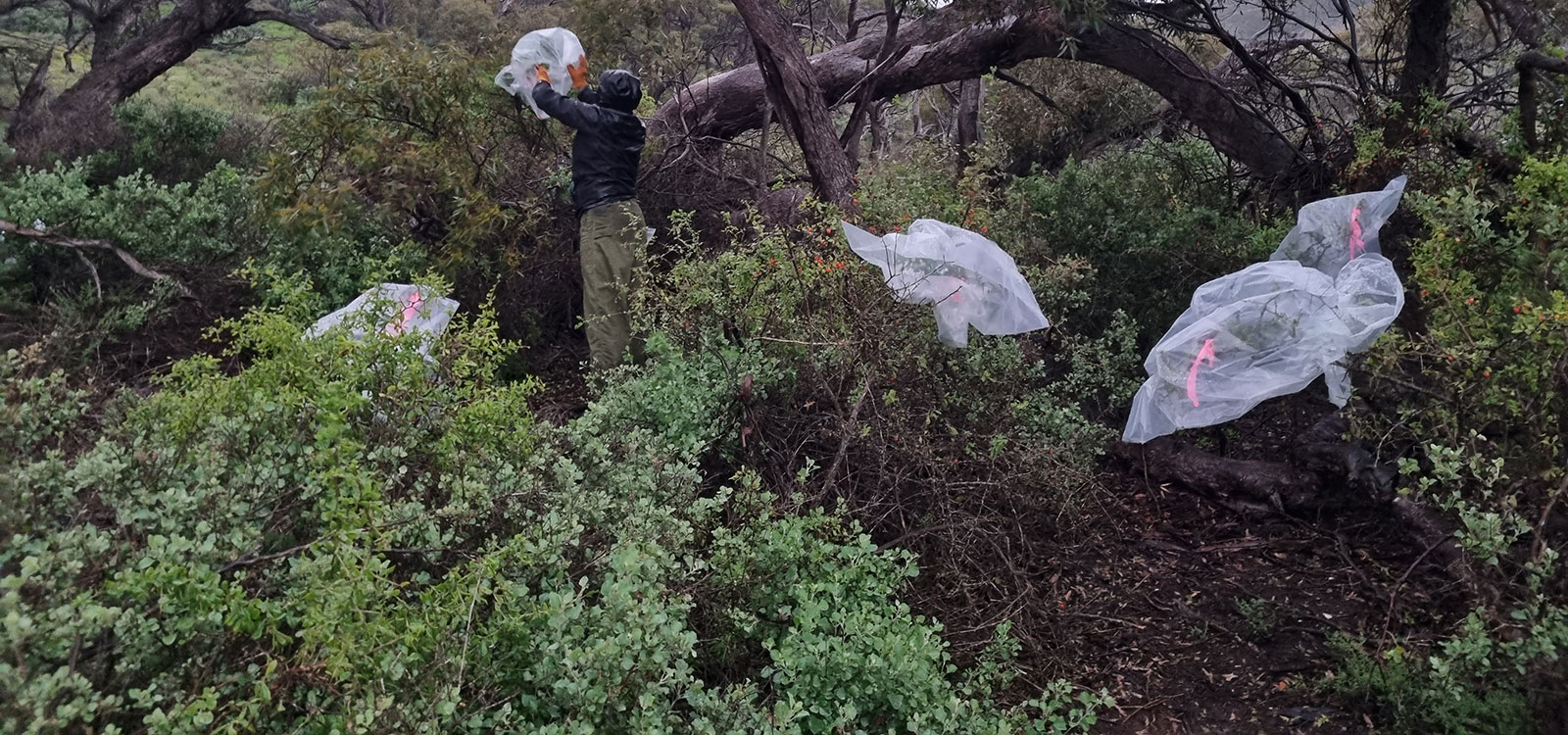
The Reserve Management team will revisit the sites 6-8 weeks post-release to observe the fungus's growth and share these results with the CSIRO. Dark pustules on leaves will indicate the fungus is spreading. Once established, the fungus is expected to weaken plants by damaging leaves, leading to defoliation and severe disease, thereby reducing seed production and helping native vegetation recover.
While biocontrol agents may take years to fully establish, ongoing monitoring by the Reserve Management team in both the release and untreated areas will help us measure the long-term impact and inform future management strategies, ensuring optimal scientific conservation actions that positively impact biodiversity.
Our collaboration with the CSIRO ensures we utilise the latest scientific methods to control invasive species such as African Boxthorn at Mongolurring and beyond, and that Nature Foundation plays an active role in the broader assessment and success of these important national research initiatives.
Learn more about CSIRO’s African Boxthorn Biocontrol Research here.
Learn more about and register your interest in becoming a Nature Foundation Volunteer here.
Support Nature Foundation’s work where it’s needed most with a general donation here.
Photos by Kelsey Bennett and Hannah Edwards.