Murbpook Nature Reserve is a 360-hectare wetland reserve on the western side of the River Murray between Blanchetown and Morgan, in South Australia's Riverland region. Murbpook and its immediate vicinity support habitat for 17 state and nationally rated fauna species, including the Regent Parrot (Polytelis anthopeplus monarchoides), and five state rare flora species, including Purple Love-grass (Eragrostis lacunaria).
The reserve's main landscape feature is the Murbpook Lagoon wetland complex, comprised of the Northern and Main Lagoons, edged by grand River Red Gums (Eucalyptus camaldulensis), which offer homes in their hollows for the Vulnerable Regent Parrots.
Recent reserve management activities have made an important contribution to Murbpook's continued ecological health.
Annual environmental watering of the Northern Lagoon commenced in early May, with water pumped from the nearby River Murray. Murbpook's Northern Lagoon is classed as a temporary wetland, usually receiving water only during River Murray flood events, which are rare nowadays.
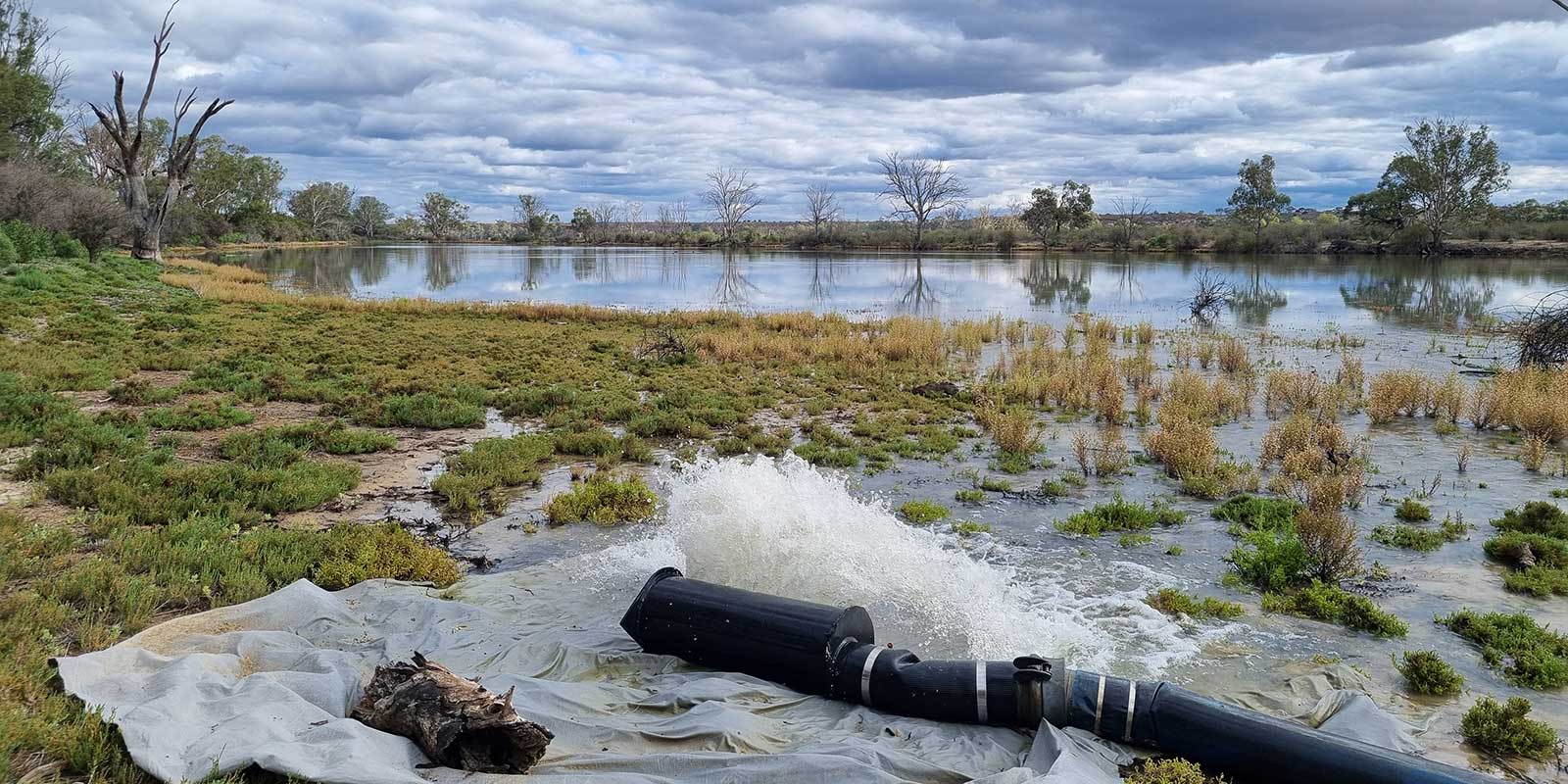
This activity typically pumps about 74ML of water into the lagoon over a three-week period. It seeks to mimic key parts of the natural wetting and drying regimes, supporting the local ecosystem by increasing wetland habitat for birds and providing water for the Red Gums surrounding the Lagoon.
The Northern and Main Lagoons are linked by a narrow channel, intersected by a ford crossing along a vehicle access track. In late April, the crossing was upgraded to ensure continued access across the reserve during periods when the channel is wet or inundated.
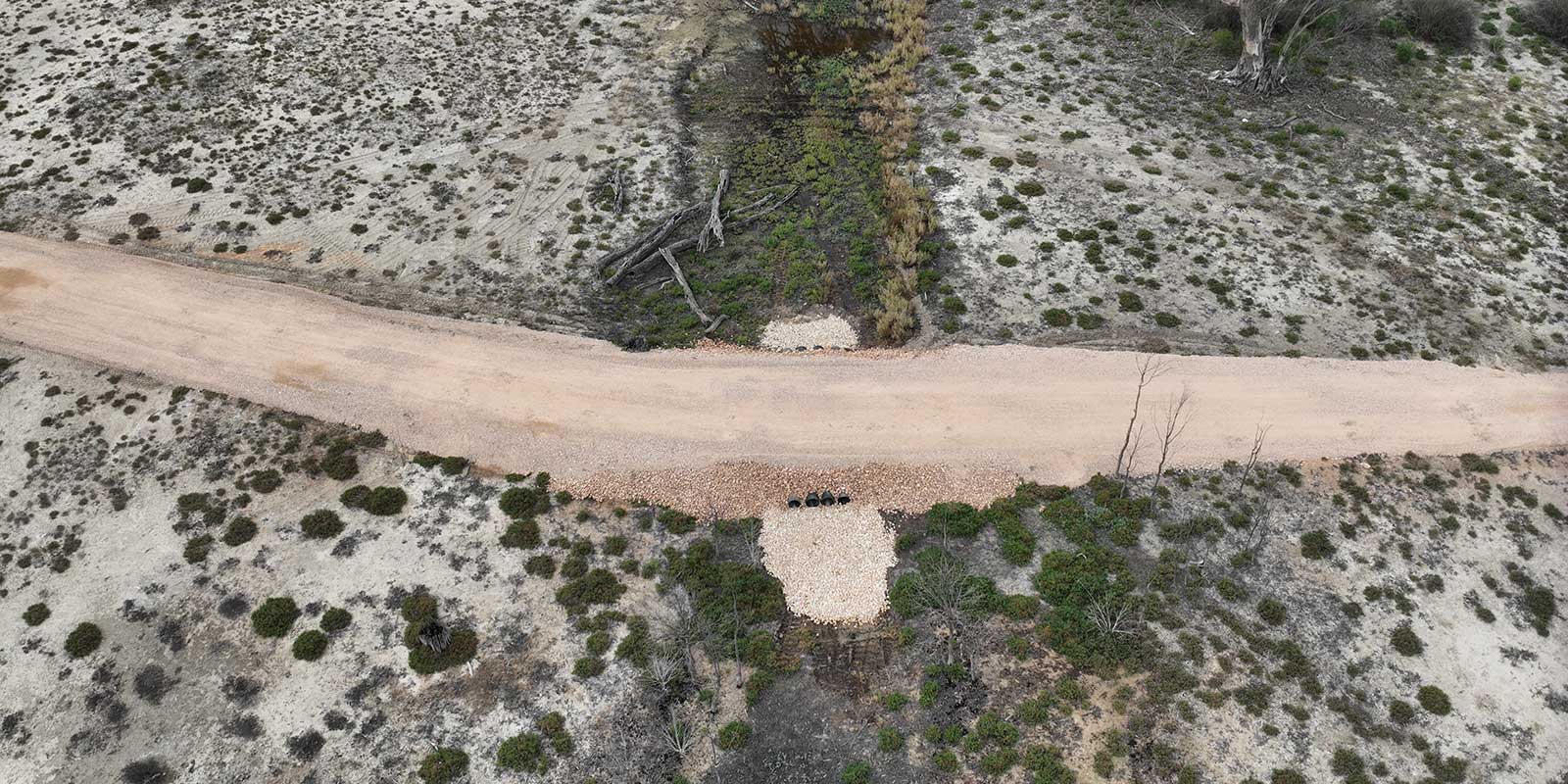
The upgrade has also enabled us to initiate salt export trials from the wetland and floodplain as part of the environmental watering, aiming to improve ecological condition by flushing out accumulated salts and reducing soil salinisation.
Wetlands naturally accumulate salts through evaporation, groundwater intrusion, and rainfall. Salt export is the process by which accumulated salts are flushed out of a wetland ecosystem via water flows into larger bodies of water, preventing toxic soil salinisation. It is a critical mechanism for maintaining ecological balance and protecting flora and fauna.
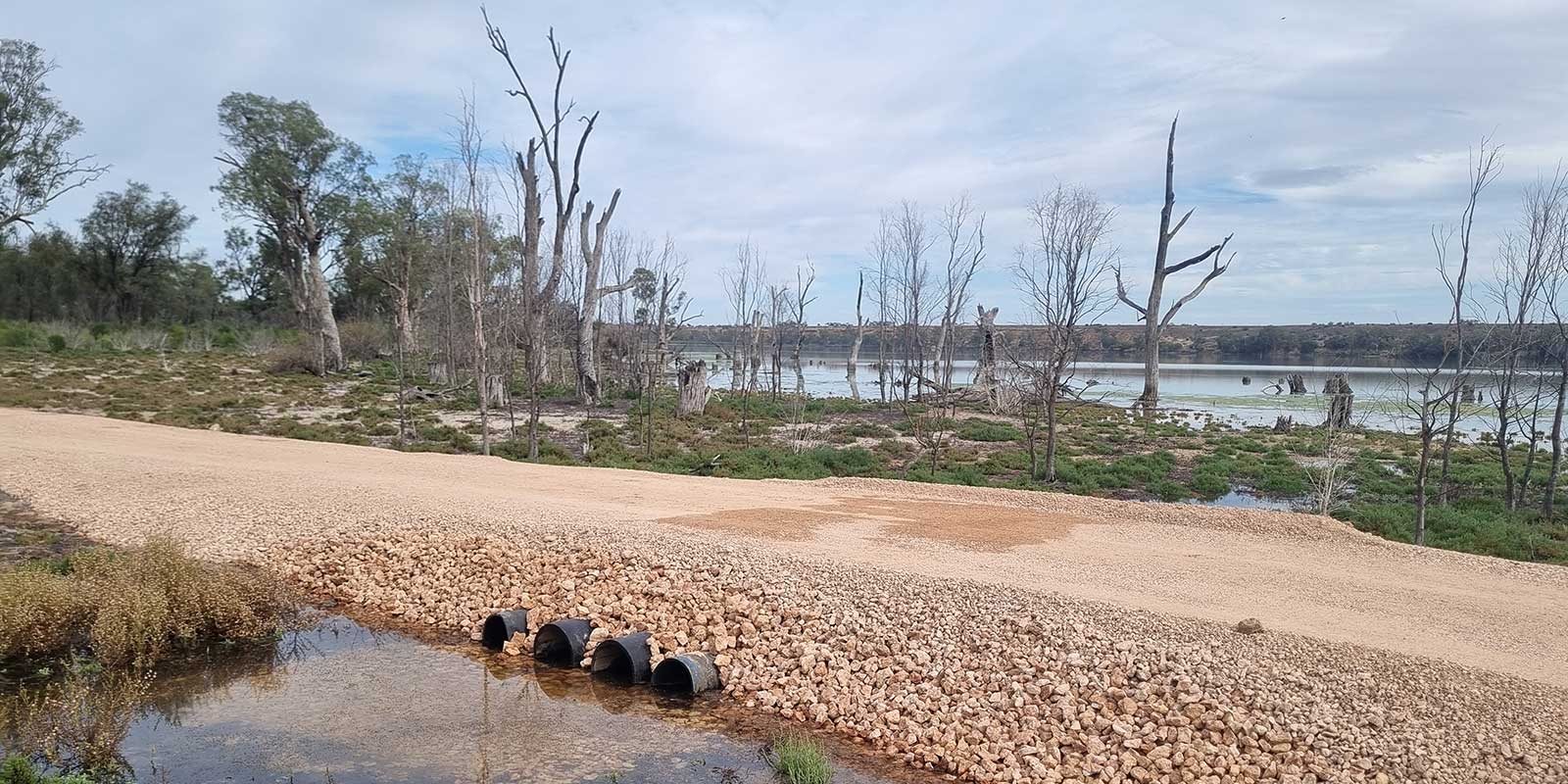
We will continue monitoring the impact of these actions throughout the year, including scheduled tree health surveys and surface water monitoring in November, to ensure our efforts lead to lasting ecological benefits.
The environmental watering project is funded by the Murraylands and Riverland Landscape Board.
Top photos: Kelsey Bennett. Bottom photo (above): Jem Shimmield.